Quantum computing: how to prepare our security without falling into hysteria



Everyone is talking about it. But few really know what it's about. However, quantum computing must now retain the attention of companies on the risks related to security. Analysis with Edwin Weijdema, CTO & Cybersecurity Lead at Veeam, of the next wave of innovations that will open up, in about ten years, new almost endless perspectives.
The advent of quantum computing is comparable to what we know today with AI. "We tend to overestimate the impact of a new technology. Then comes the underestimation, and finally we find ourselves faced with the challenge, "says Edwin Weijdema, Field CTO & Cybersecurity Lead at Veeam.
The right strategy is therefore to prepare well without giving in to excessive reactions. Because it must be admitted, quantum computing will eventually impose itself, it is better to prepare for it as soon as possible to reap the fruits safely.
Quantum computing is not AI
"Quantum computing is sometimes presented as the tum of AI. In reality, this is not the care, "explains Edwin Weijdema. If it will help advance AI solutions, it will be above all a physical advance. Namely machines capable of solving problems that pose difficulties for our conventional computers. The latter operate with combinations of 0 and 1, while quantum computers use qubits and can process many more combinations simultaneously.
“Quantum computing is not a more powerful machine than our current computers. It does not replace our laptop, cloud or AI. Unlike a traditional computer that seeks a solution by exploring all possible tracks one by one, the quantum computer examines all these tracks simultaneously by quickly determining the most promising option, "explains the Veeam expert.
For example, quantum computing can help develop new drugs without having to test them on humans beforehand. This is where the difference with AI lies. "While the latter needs large data sets to produce a result, quantum computing can operate with much less data and generate information itself," adds Edwin Weijdema.
SAVE THE DATE - October 15, 2026 Hi Site, Grimbergen (Brussels)
In other words, AI excels as an analyst gifted at recognizing patterns or automating processes. While quantum computing focuses on complex mathematical problems. In practice, quantum computing and AI will be able to solve different types of problems. We can therefore imagine that these two concepts will reinforce each other.
"In the future, quantum computing could take on some AI workloads by exploring several options simultaneously and paving the way for solutions that we are not yet aware of today. In addition, AI could accelerate the development of quantum computing, for example through the design of new chips, error correction, experiments, etc. It is in terms of optimization that the overlap between the two is located, "summarizes Edwin Weijdema.
The issue of data security
For the company, the value of quantum computing will be manifested above all in the analysis of the different possibilities within a decision-making process. According to Edwin Weijdema, "AI can already do it today, but only on the basis of the data you have. Quantum computing provides access to new techniques and solutions. There is therefore no reason to fear the evolution of quantum computing. However, we must ask ourselves how best to prepare for the risks and what will need to be done to fully exploit the opportunities it will offer us in the future.”
Because there will be risks, of course. "Just like AI, quantum computing is far from infallible and we must learn from our mistakes. This is why quantum computing is already an integral part of a good resilience strategy, "says Edwin Weijdema. From a security perspective, the challenge therefore remains data-centric. What data does your organization have? Which data is important and deserves additional protection? To this is now added another question: what is the life of your data? How long should data remain confidential?
"Cybercriminals are now seiring encrypted data that they can't do for the moment. But when they have access to quantum computers, they will be able to break this encryption in just a few seconds," warns Edwin Weijdema. This concerns not only production data, but also backups. "There is a good reason why backups are increasingly targeted by cybercriminals: they often contain sensitive data. Therefore, it may be useful to switch today to a new encryption technology".
Use Lego instead of concrete blocks!
Edwin Weijdema advises now to have a concrete plan, if not to become a specialist in quantum physics. It is time to identify data with a long life, because their usurpation could cause problems in ten years. Good preparation starts with backups and data protection.
"Don't build your security in concrete, but rather with flexible modules that you can replace with bricks of another color or shape without having to demolish the entire model beforehand," advises Edwin Weijdema.
"Learn without panic, but be curious and make sure you are ready. Just like AI, many companies are having trouble adapting, while some organizations have understood that they need to prepare. They have created reliable and verified data sets, which they use in their own models. Thanks to AI, these organizations have indeed taken a head start from the competition.”
And it's up to the expert to conclude: "Quantum computing goes in the same direction. The right reaction is not fear, but preparation. Because resilience gives organizations the confidence to move forward safely."
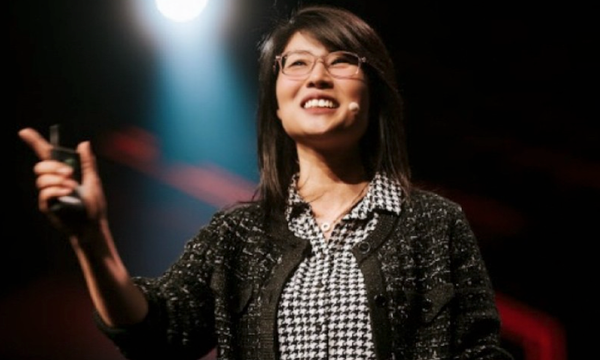
Edwin Weijdema, Field CTO EMEA & Cybersecurity Lead at Veeam and speaker on VeeamOnTour